Demystifying a 5x4 keypad matrix HC-35
On your favorite selling sites for cheap electronics you may find a nice looking keypad/push button matrix with 16 black buttons arranged in a 4x4 matrix, another row of 4…

On your favorite selling sites for cheap electronics you may find a nice looking keypad/push button matrix with 16 black buttons arranged in a 4x4 matrix, another row of 4…
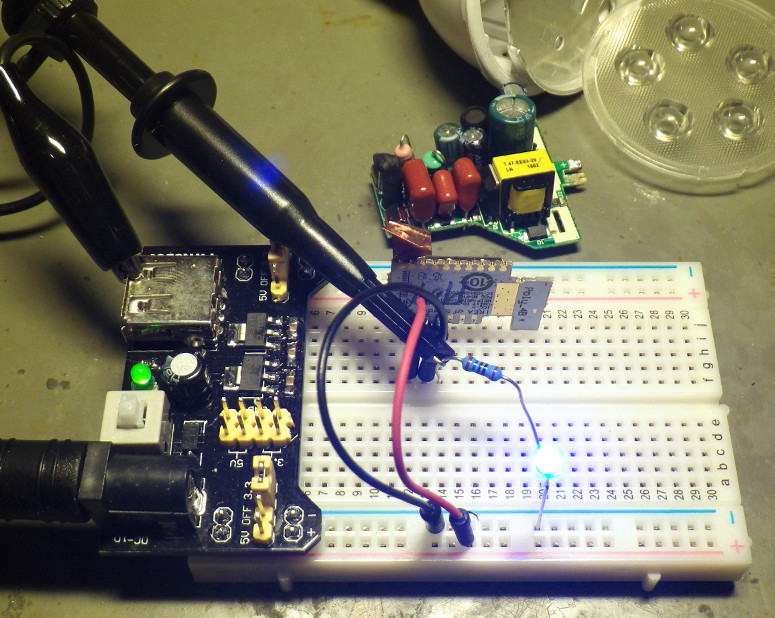
I recently visited IKEA again and got interested in their affordable line of home automation/LED lighting products called TRÅDFRI (meaing wireless in a play-with-words kind of Swedish). Of course there…
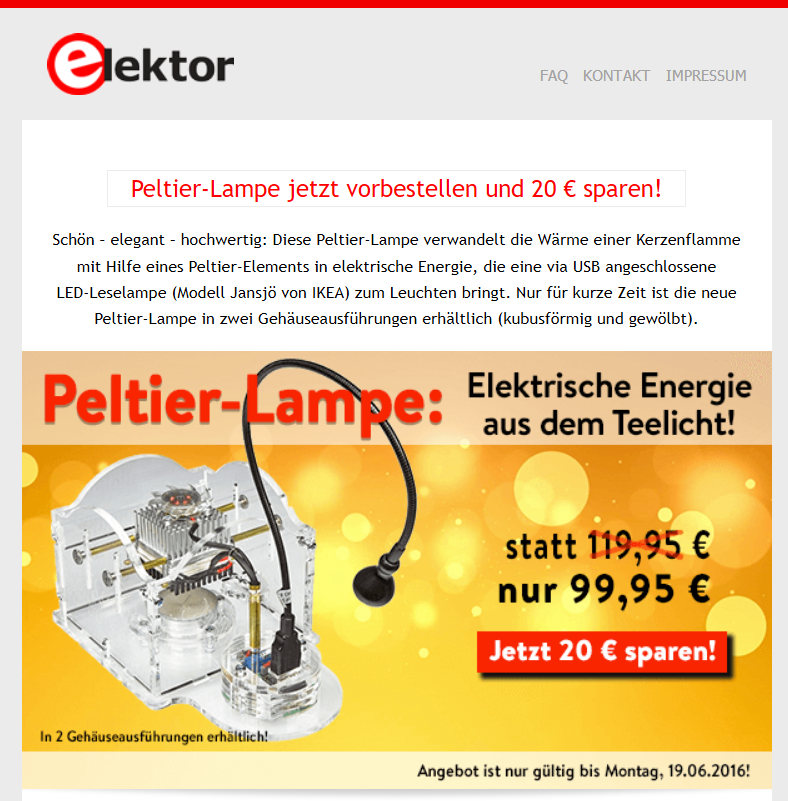
Today I received a newsletter from the publisher Elektor. I am offered a special deal on a Peltier power generator which can power an LED light from a small candle. And this for an astonishing price of €99.95 instead of the normal price of €119.95.
I’ll have to buy this – or wait a second…
I know the IKEA LED light Jansjö from the add quite well, so I thought until I noticed that this was an USB rip-off from the same series:
IKEA Jansjö spot light: 3 W power, 88 lumen
IKEA Jansjö USB: unknown power(ca 0.5 W?), 10 lumen
We can supply an LED light with probably 0.5 W and 10 lm from the heat of a candle, isn’t it great?
If we stay at IKEA we can buy these candles, 24 with a burning time of 4 hours for €0,99. These together could light our LED light for a full 4×24 hours = 96 hours. Thus we get a total of 96 h x 0.5 W = 48 Wh or 0.048 kWh for €0,99. This corresponds to €20 per kWh, about 100x more expansive than electricity from the wall outlet (in Germany) – ignoring the downpayment on the gadget itself.
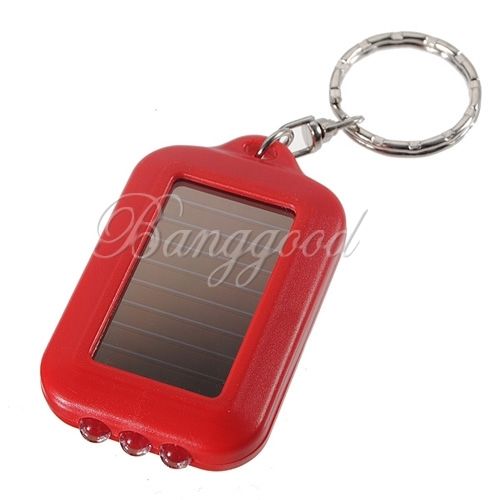
Inspired by a Youtube video from Bigclive I ordered some Solar Power Rechargeable Flash lights. I knew the risk but I thought it would be a possible way to get hold of some small amorphous silicon solar cell modules for some own projects.
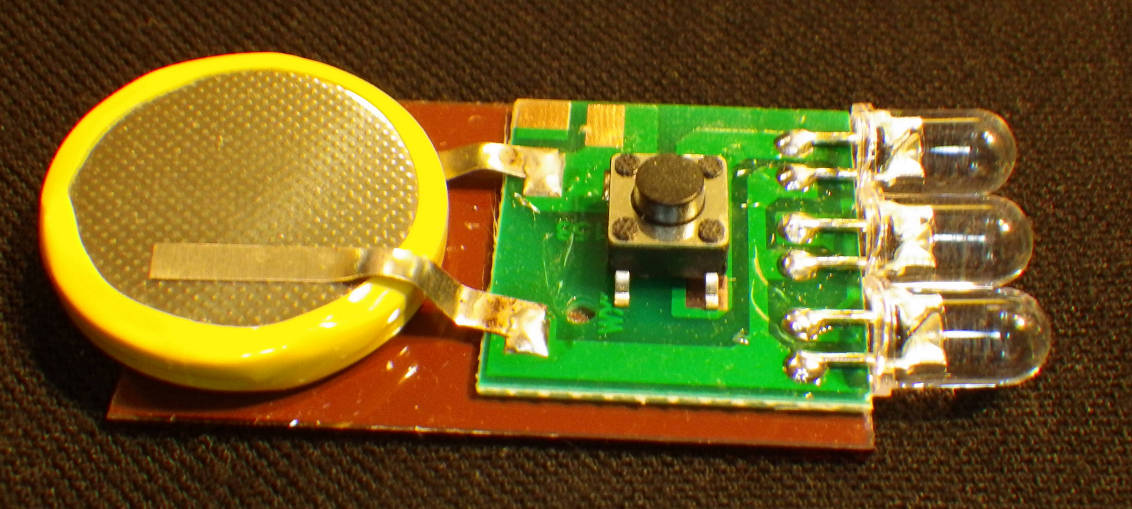
Today I received my package from ebay seller heavends. And yes, these are complete fakes. The glass plate looks like an amorphous silicon solar cell module and even shows the typical brown lacquer finish on the backside, however it lacks all electrical contacts. Inside the plastic body there is a circuit board connecting the three white LEDs to a heat-shrinked soldered pack of two non-rechargeable CR2016 batteries. Current limitation to the three LEDs in parallel connection is only by means of the internal series resistance of the batteries.

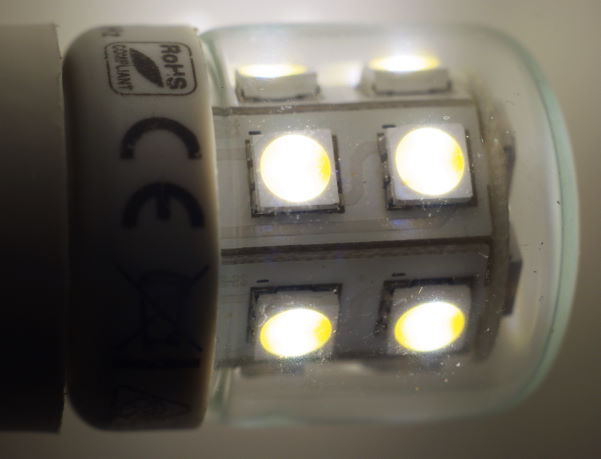
Transatlantic recently asked about a new IKEA LED lamp, the LEDARE with 1000 lm. It comes as a quite big globe (diameter 95 mm) with an E27 socket, an electrical…
Two weeks ago I wrote about my experience with special price offers for LED bulbs at Bauhaus. What I didn't write was that I then just went to the other…
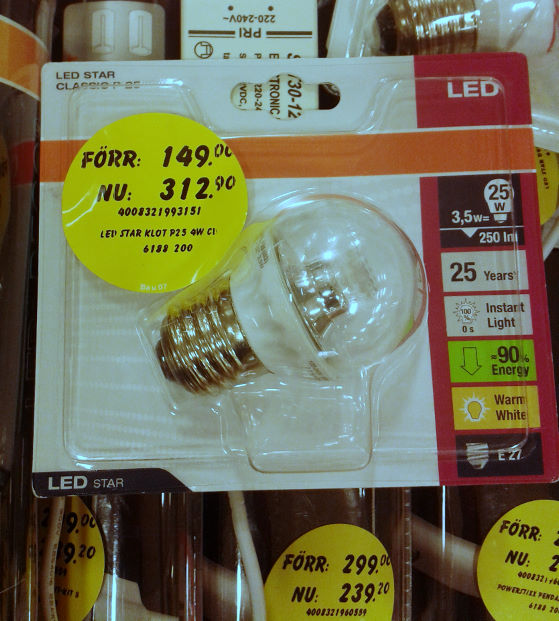
Today I was at Bauhaus in Uppsala, just browsing, not looking for anything special. Close to the exit there was a table with LED light bulbs which were obviously taken out of the regular assortment and re-labelled with new prices.
Usually you would expect a bargain – and since I am somewhat sold to LED light bulbs I had a close look.
Well it was not worth the looking – these were still quite overpriced as compared to the average shop price, not to mention the internet price. but then I saw one very special offer:

Today the art festival ”all lights on Uppsala” ended and Christmas season officially started with the 23rd annual fireworks by the local newspaper UNT.
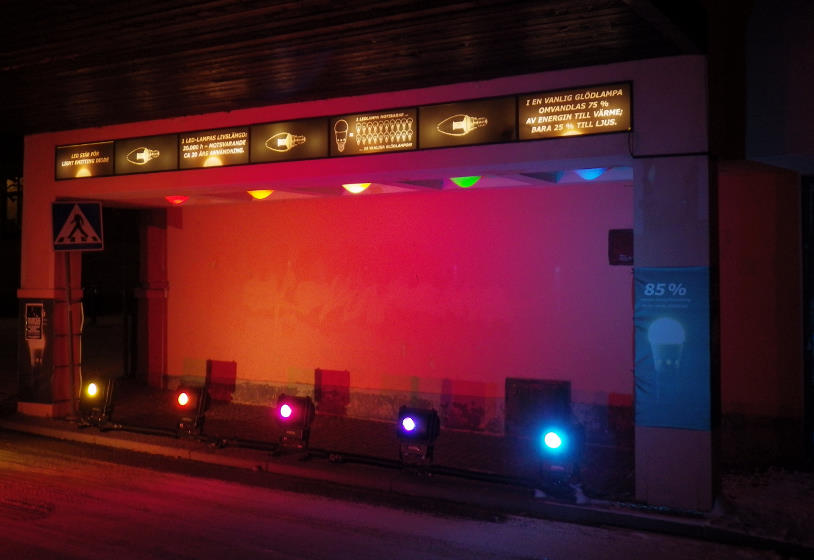
During the festival, the artists and the city officials wanted to emphasize why LEDs will be the light source of the future. At one of the installations the efficiency of the humble incandescent light bulb was compared to the LED. There everyone passing by could read that the incandescent light bulb ”converts 75% of the energy into heat and only 25% into light”.
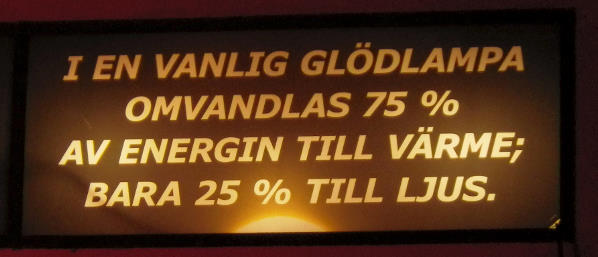
I tried to reach the responsible people already in the first week of the festival, but only got a reply after 2 1/2 weeks. At that time it was considered too late to correct it to the correct number: an incandescent light bulb is much better than pointed out. Not only 75% of the electric energy is converted into heat, but rather 97.5%. Only about 2.5% of the electric power is converted into light!
But in the believe of their 25% efficient incandescent light bulbs it is probably understandable that the city of Uppsala even this year continues to use incandescent lights in their Christmas illumination – while Stockholm has abandoned the use of incandescents for this purpose two years ago.
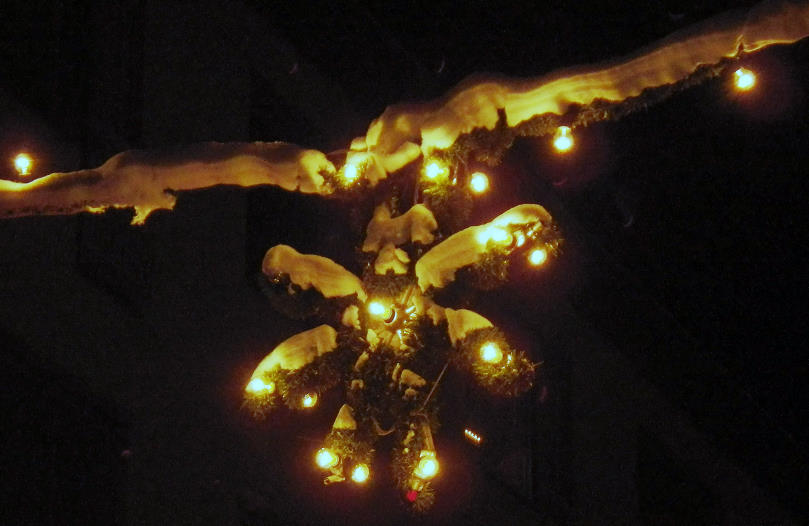
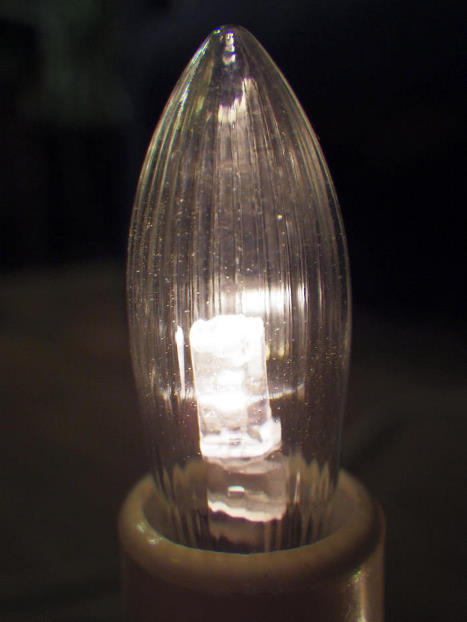
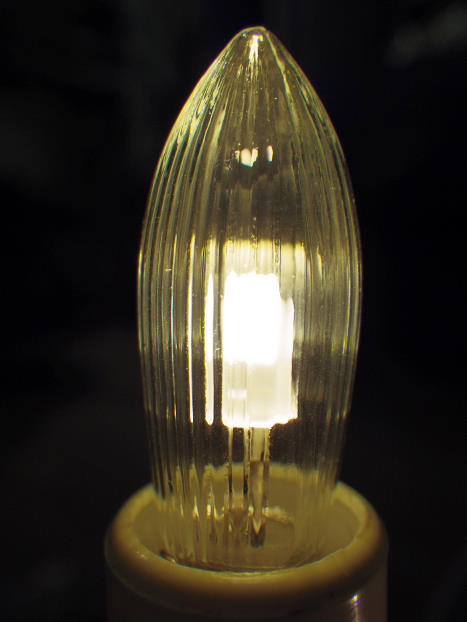
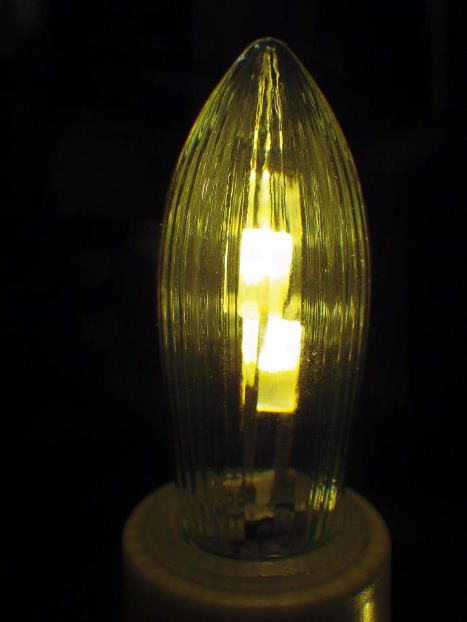
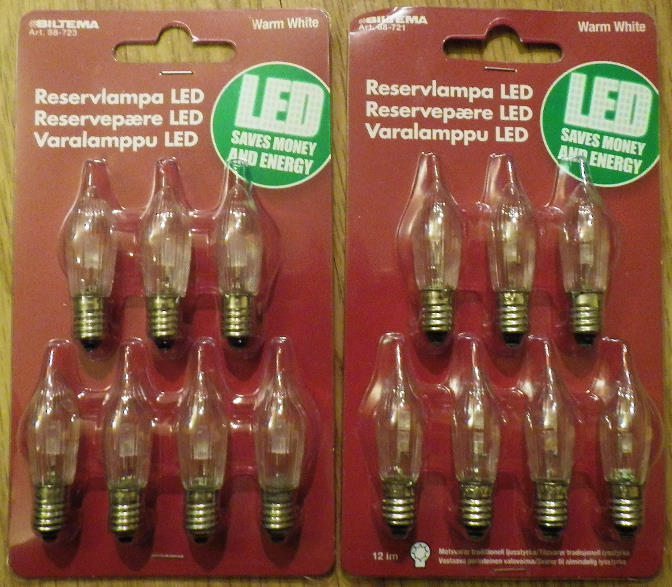
I myself continue to use LEDs in my Christmas decorations. Last year the LED conversion bulbs for the 7-lighted window decorations were only sold in packs of 4 – kind of stupid, unless you had enough of these decorations or wanted to take apart some of the bulbs. This year at least Biltema is selling packs of 7 in two different versions: one with two 3mm LEDs inside the bulb, and one with a single diffuse 5mm LED inside. Both of them appear to be even better than last year’s versions – both in light color and manufacturing quality.
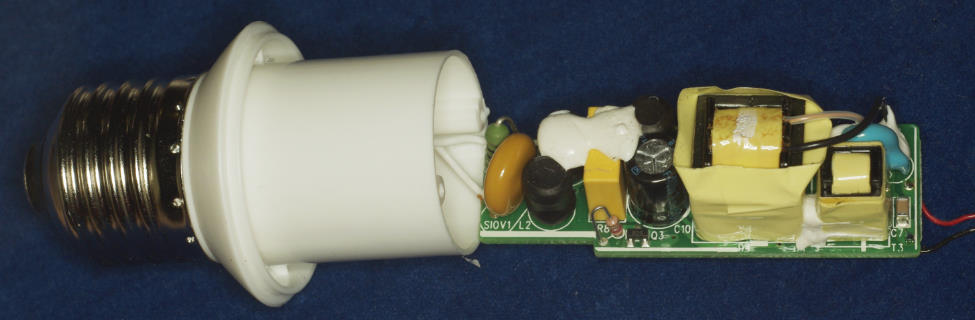
Ok, let us continue the reverse engineering of the E27 LED bulb LEDARE from IKEA. After describing the actual light emitting diode assembly in the previous post, I will today look deeper under the hood into the power supply.
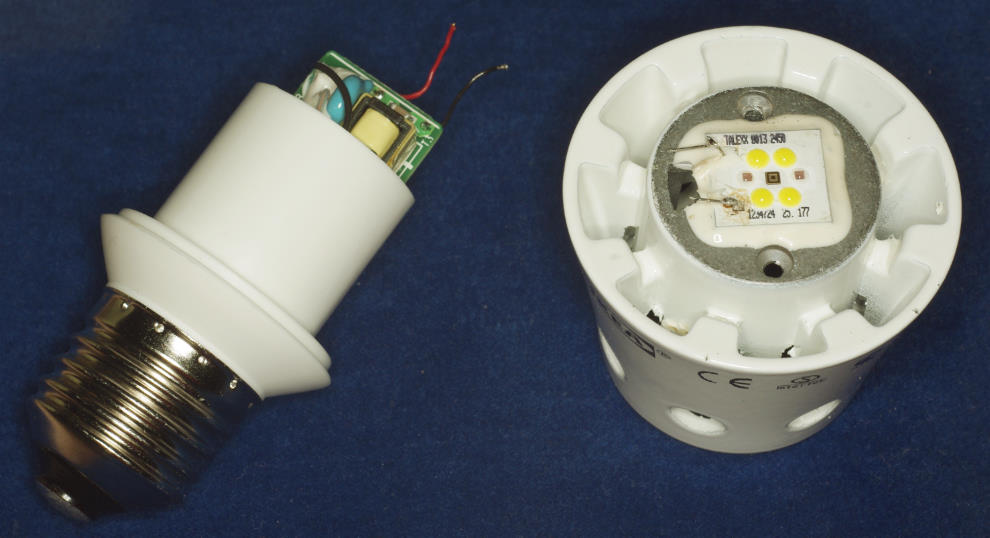
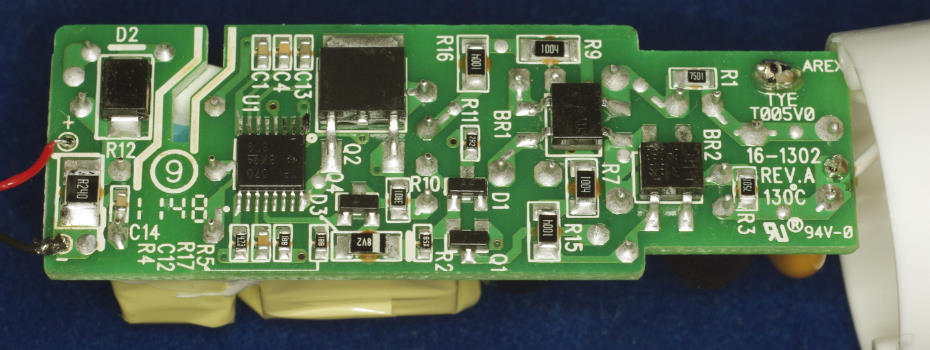
The power supply itself is located in a plastic cylinder which is screwed to the cast metal housing of the lamp. It is the most elaborate design I have seen so far in any LED or CFL-light. The circuit contains three inductors in the line filter and PFC (power factor correction), two bridge rectifiers, two transformers and only one electrolytic capacitor. Since electrolytic capacitors are the most vulnerable components in these circuits this promises some longevity for the lamp.
The heart of the design can be seen on the bottom side of the circuit board. It is an TPS92070 High-Efficiency Integrated Dimming LED Lighting Driver Controller from Texas Instruments. Even though the LED light bulb itself is marked as not-dimmable, the controller chip itself supports dimming.