Fieldfare
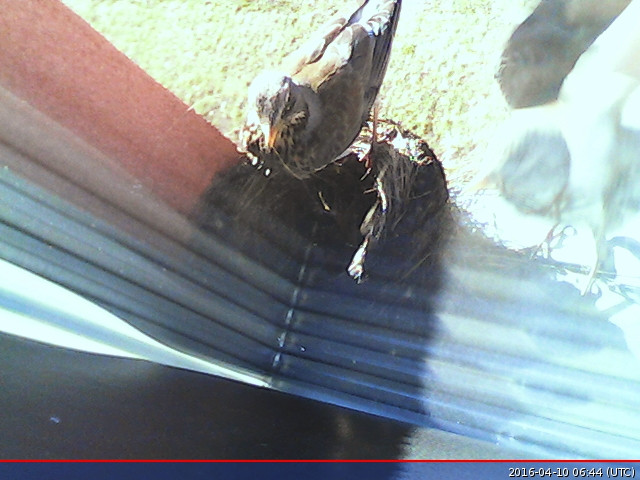
Nils Paakkonen was probably right, my new neighbors outside the office window is a pair of Fieldfares.
This morning the whole family was at the nest:
 (more…)
Nils Paakkonen was probably right, my new neighbors outside the office window is a pair of Fieldfares.
This morning the whole family was at the nest:
(more…)
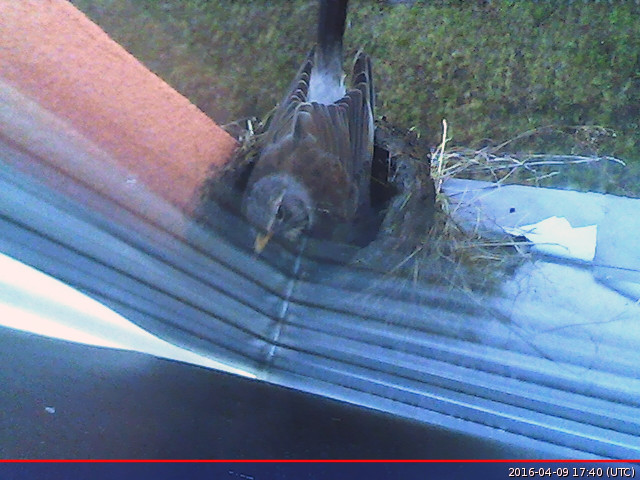
Last Friday I heard some strange noises outside my office window. To my big surprise I then noticed that there was a bird’s nest growing on the window sill. It did not take long until I even saw the new tenant moving in:
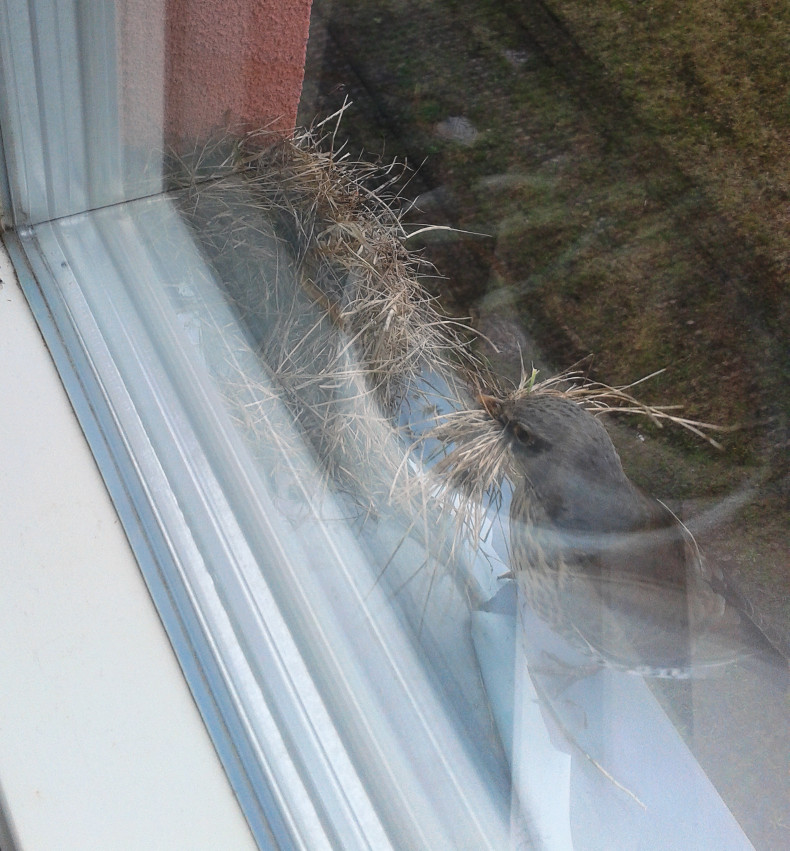
So far I have identified the birds as Song thrushs and the nest was steadily growing until about lunch time. After lunch no bird returned and I was almost afraid that something might have scared them off. However, I still planned to install a webcam to watch the nest during the coming weeks.
In the evening I set up a left-over Raspberry Pi Model A and an simple USB webcam. It’s running Raspbian Jessie and fswebcam and curl using a cron-ed script file. The camera itself is duct-taped to the inside of my office window.
It was not so simple to set up a Raspberry Pi as a 3D-print server as I had hoped. It started with issues with the WiFi-dongle, continued to a complete…
Next step in my journey into 3D-printing would be to set up a server to remote-control my 3D-printer. Since two weeks ago I have a spare Raspberry Pi 2 lying…

Yesterday I got my Winhao Duplicator i3 and when I was setting it up and adjusting the print bed I thought: "Is it supposed to be like this?" The print…


It's been a while since I exposed my students to counterfeit chips from dubious eBay channels, but now it has happened again. For a couple of projects I provided my…
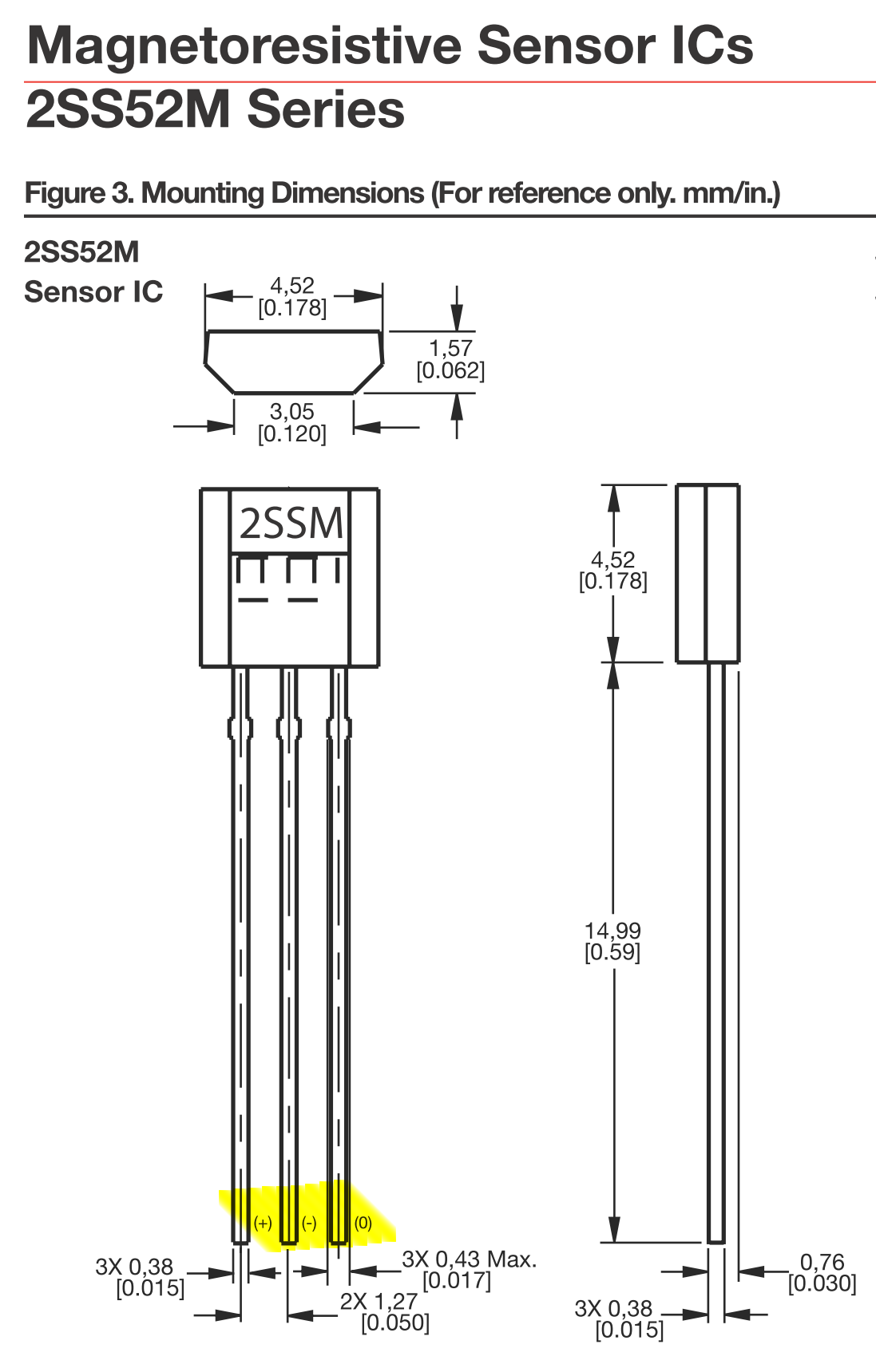
Today I wanted to use a magnetic sensor for a small project. I had three Honeywell 2SS52M sensors in my stock – a magnetoresistive switch, more sensitive than your usual Hall-effect based ones. For my project it didn’t matter, but since I had these lying around I could as well put them to some use.
Since I didn’t know the exact pinout of these TO-92-similar devices, I asked Google. The first link after the advertisements was the direct link to the datasheet on Honeywell’s homepage.
Happily I realized that it was supposed to have the same pinout as the more common Hall-effect sensors, e.g. the venerable A3144 from Allegro. When my AVR-programmer decided to switch itself off after connecting the finished circuit I got a bit suspicious, but not suspicious enough to not burn up two out of three of my sensors.
What had happened?
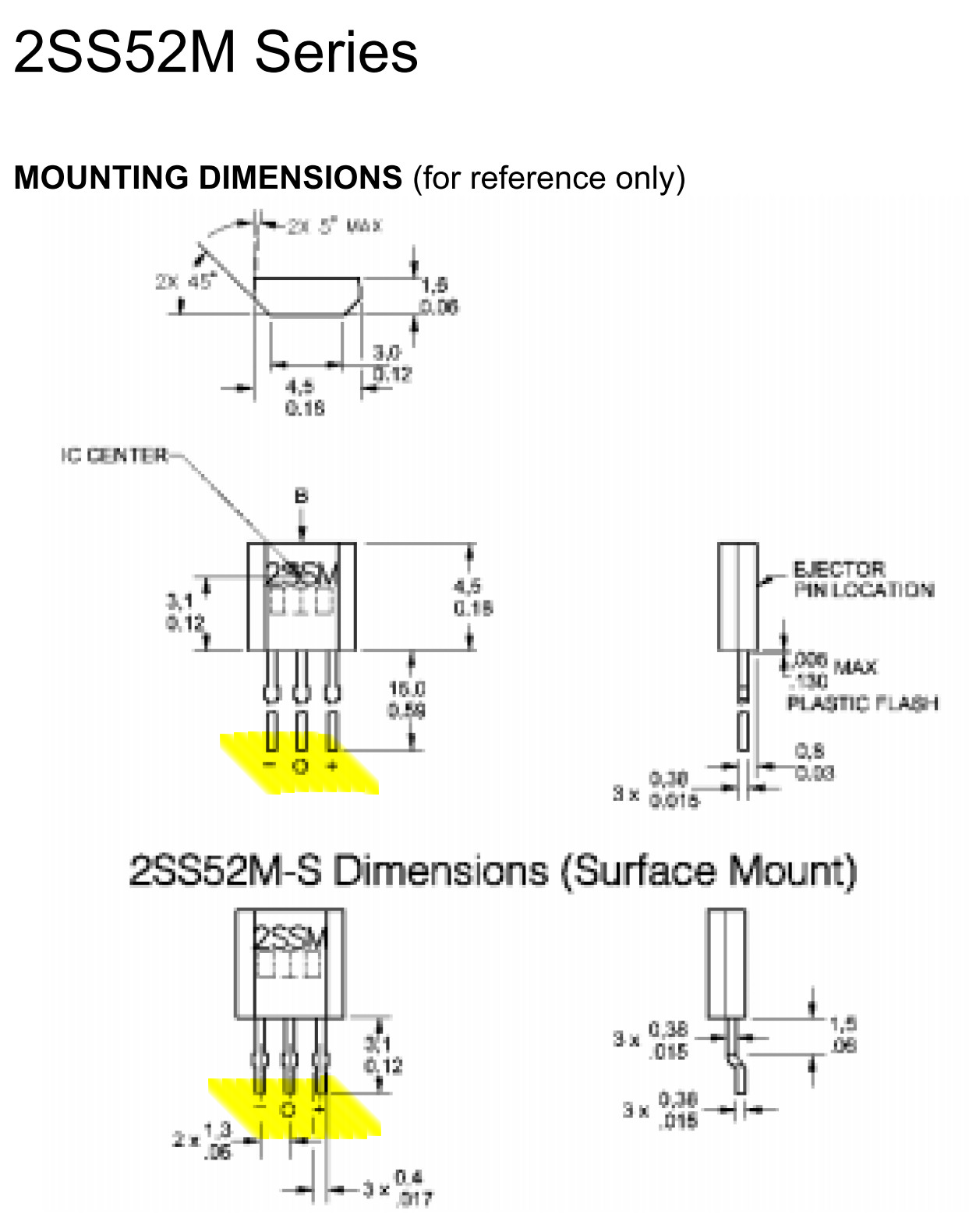
Well obviously there is a printing error in Honeywell’s most recent datasheet, dated March 2016. Figure 3 should show the pinout of the sensor, but if you compare it to an older (less fancy) version of the datasheet, which the internet hadn’t forgotten, then you will see the difference. I assume that Honeywell has not changed the actual pinout of the devices in production – let’s see and wait if they will answer my email pointing out their mistake.

Unbelievable, but the migration to my new laptop and from Windows 7 to Windows 10 is easier than anticipated.
Among other things this is thanks to the following programs:
| Old | New | |
|---|---|---|
| model | HP Probook 4520s | ASUS N551ZU |
| purchased | 2010-06 | 2015-11 |
| screen | 15.6″ | 15.6″ |
| processor | Intel Core i3 | AMD A10-7400P |
| RAM | 2 GByte | 8 GByte |
| storage | 250 GByte HDD | 250 GByte SSD |
| DVD writer | DVD writer | |
| weight | 2.5 kg | 2.5 kg |
| OS | Win 7 Pro | Win 10 Home |

I am still convinced that Firefox is a great browser, but lately something went terribly wrong. The browser would take up 1.7 GByte of virtual memory almost immediately after starting, almost independently on the number of open tabs or visited pages.
In order to debug the problem I installed another add-on (after actually reading on the web that add-ons might be the culprit in the first place). The add-on Tab-Data indicates in each open tab the amount of memory used by rendering the contents of the tab.
Well the numbers really did not add up. I usually have around ten open tabs at a single time, and with an average of 2 MByte per tab I really did not come close to 1.7 GByte of virtual memory needed.
The main suspect according to the general agreement on the web is the Ad-blocker. And of course I use an Ad-blocker, because otherwise the web has simply become unusable – blame yourselves with your banners and popups,…
I used to use Adblock Plus but earlier this year I switched to its fork Adblock Edge due to performance and compatibility problems. Yesterday I found the information that Adblock Edge wasn’t recommended anymore and instead it was forked into uBlock Origin “Finally, an efficient blocker. Easy on CPU and memory.”
And so far I must say that this self-confident message appears to be justified. Firefox is now satisfied with about half the amount of virtual memory compared to before the switch and has not crashed yet… (more…)
